
Change Management Essentials ⚙️
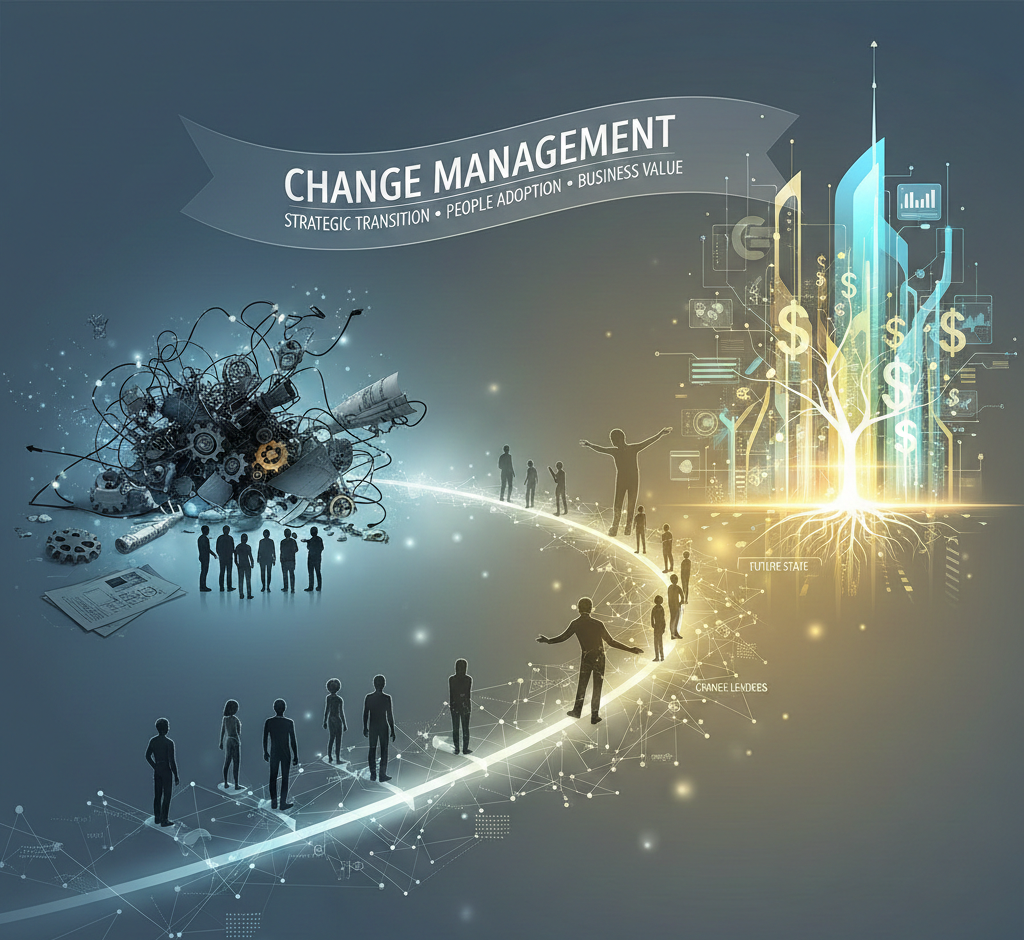
Change Management is the strategic and systematic process of guiding an organization through a transition to achieve a desired future state. It is not just about implementing a new technology, structure, or process, but primarily about helping people—employees, managers, and stakeholders—successfully adopt and internalize the changes. Effective change management minimizes disruption, maximizes employee buy-in, and ensures that the change delivers its intended business value.
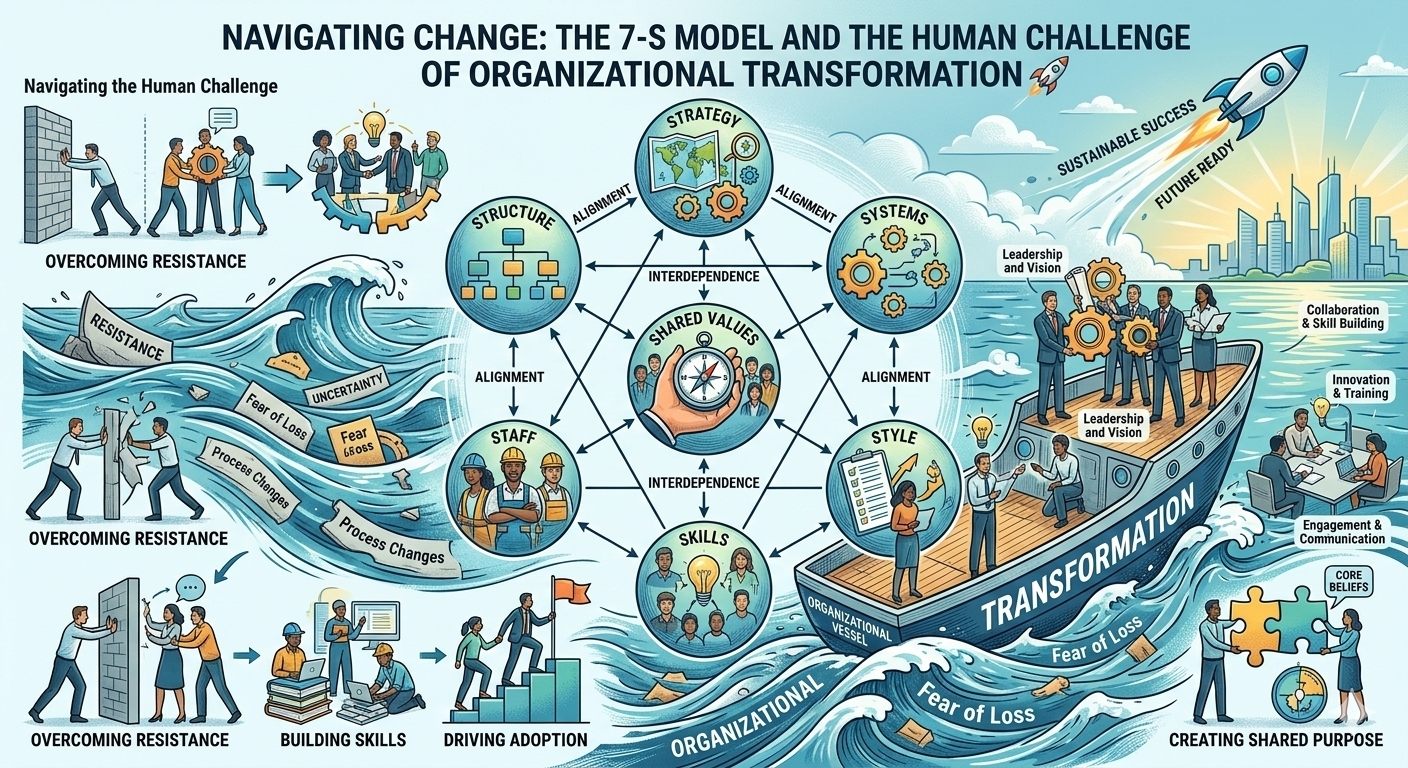
7-S Framework for Organizational Analysis:-
The McKinsey 7-S Framework is a key model used in change management to analyze an organization’s design and ensure that all critical components are aligned to support the proposed change. It asserts that there are seven interdependent elements that must be managed simultaneously for any change effort to succeed.
| Category | Element | Description |
| “Hard” Elements (Easier to Define/Measure) | Strategy | The plan developed to achieve competitive advantage. |
| Structure | How the organization is organized (e.g., hierarchical, matrix, flat). | |
| Systems | The formal and informal daily procedures and processes (e.g., IT systems, reporting, performance management). | |
| “Soft” Elements (Harder to Define/Measure) | Shared Values | The core beliefs and guiding principles of the organization’s culture. |
| Skills | The actual capabilities and competencies of the employees and the organization as a whole. | |
| Style | The way managers lead, interact, and behave (leadership style). | |
| Staff | The number and types of personnel, as well as talent management and motivation. |
Three Levels of Change Management:-
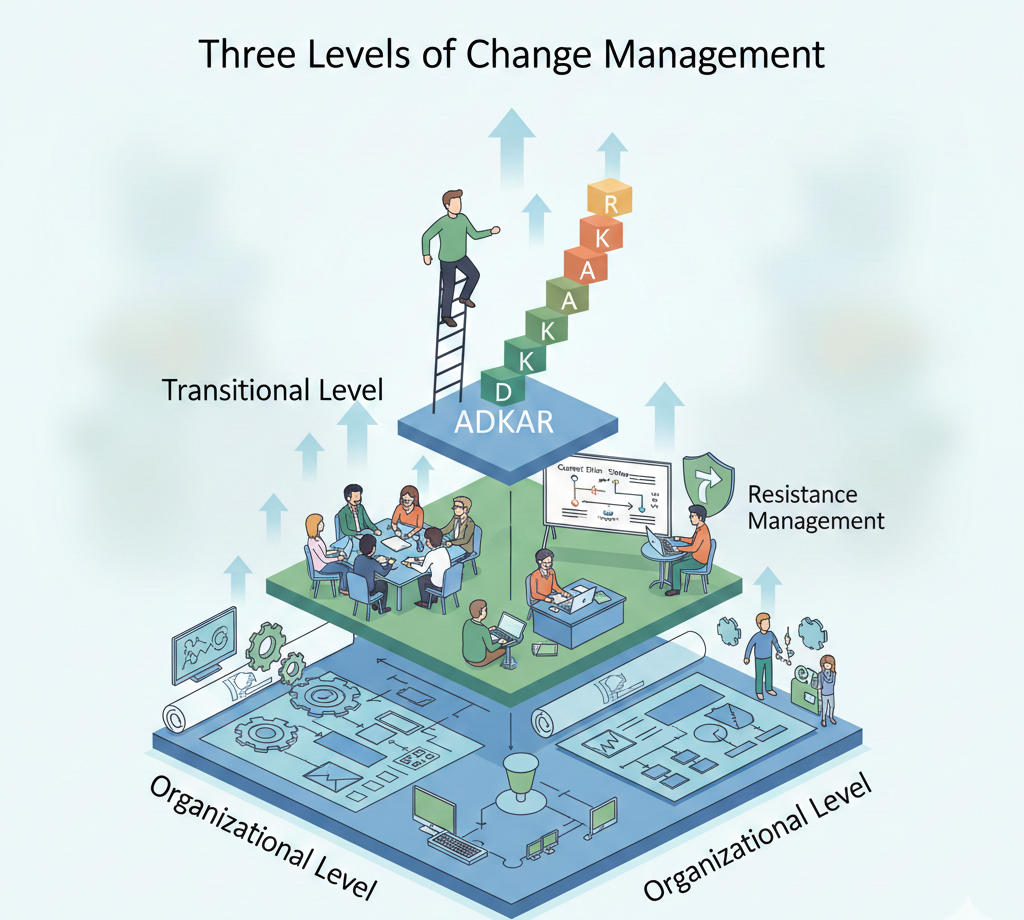
Change management activities must be addressed across three distinct levels to ensure comprehensive adoption:
-
Organizational Level: Focuses on the overall structure and systems that will be changed. This includes defining the project scope, designing the new organization chart, implementing new technology, and creating communication plans.
-
Transitional Level: Focuses on managing the process of moving from the current state to the future state. This involves setting up the change management team, training key stakeholders, managing resistance, and tracking performance during the transition period.
-
Individual Level: Focuses on helping each employee make the personal transition required by the change. This is typically done using models like ADKAR (Awareness, Desire, Knowledge, Ability, Reinforcement) to ensure individuals understand the change, want to participate, know how to execute it, and are sustained in the new way of working.
Why Change Management is Difficult 🧠
Implementing organizational change is inherently challenging because it fundamentally deals with human psychology and behavior.
-
Resistance to the Unknown: People often prefer the known difficulties of the current state over the unknown risks of a new state. Change disrupts comfort, routine, and perceived security.
-
Perceived Loss of Control: Change is often viewed as being done to people, rather than with them, leading to feelings of powerlessness and cynicism. Employees worry about losing job security, status, or valuable working relationships.
-
Past Experience: If previous change initiatives have failed, been poorly managed, or resulted in negative consequences for employees, the organization develops change fatigue and immediate skepticism toward new efforts.
-
Poor Communication: Ambiguous, infrequent, or delayed communication fuels the rumor mill, eroding trust and preventing employees from building the necessary Awareness and Desire to support the change.
-
Lack of Leadership Alignment: If management does not visibly support, model, and reinforce the change, employees will assume the change is not serious or temporary, leading to superficial compliance rather than true adoption.