

Introduction 📢
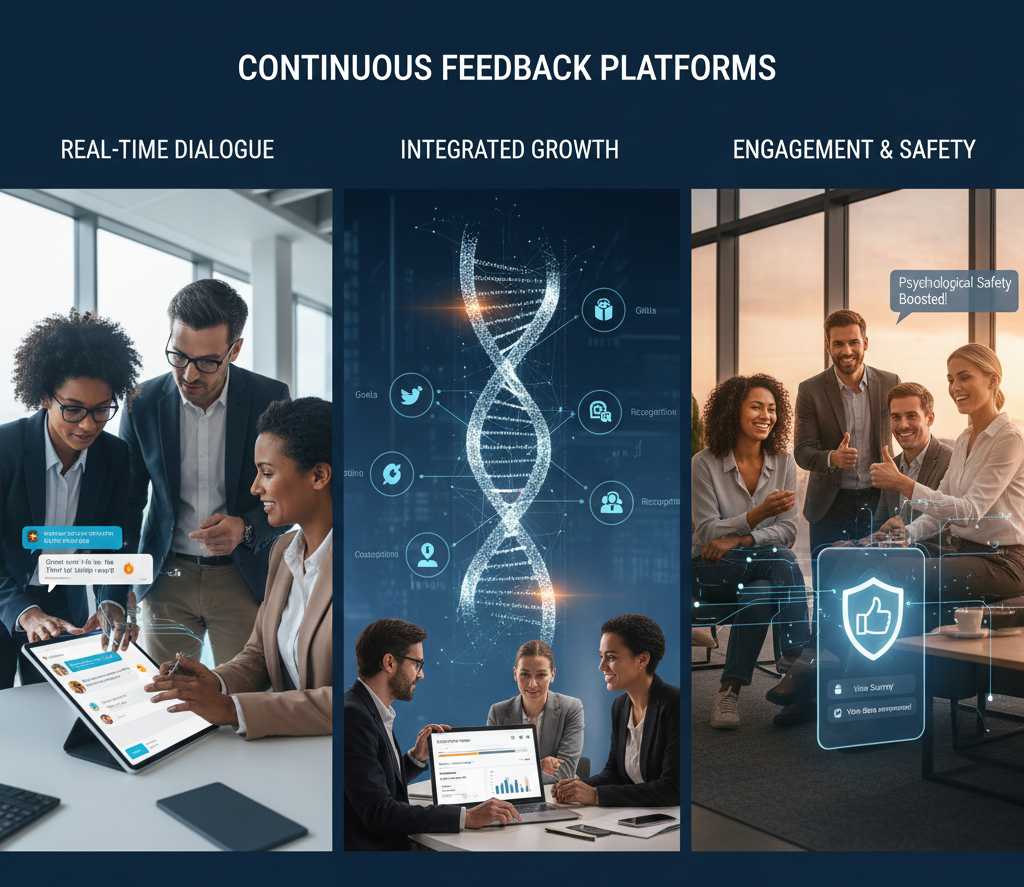
Continuous Employee Feedback and Communication Platforms are modern Human Resources technology solutions that facilitate the shift from traditional, infrequent, and retrospective performance reviews (like the annual appraisal) to a dynamic, real-time, and forward-looking system. These platforms act as the digital infrastructure for fostering a “listening culture” by enabling frequent, two-way communication channels between employees, managers, and peers. Their core function is to ensure that feedback—whether developmental, corrective, or purely celebratory—is timely, relevant, and actionable, thereby accelerating employee growth, aligning work with organizational goals, and significantly boosting employee engagement and psychological safety.
Core Components and Function:-
The strength of these platforms lies in their ability to integrate various communication and performance tools into a single, accessible hub.
-
Real-Time Feedback Mechanisms: They allow for immediate, short-form feedback to be exchanged after a specific event (e.g., finishing a project, leading a meeting). This contrasts sharply with waiting months for a formal review. This immediacy makes the feedback more accurate and impactful.
-
Pulse Surveys: Unlike lengthy annual surveys, these are short, targeted questionnaires (often 3-10 questions) deployed frequently (weekly, monthly, or after key events) to gauge employee sentiment, morale, and reaction to specific changes. This provides real-time insights for organizational leaders.
-
Check-in & 1:1 Management: The platforms provide structured templates and prompts for regular manager-employee conversations, shifting the 1:1 from a status update to a coaching and development discussion. They track discussion points, goals, and commitments.
-
Goal Tracking & Alignment: Goals (OKRs or KPIs) are displayed dynamically. Feedback on daily work can be instantly linked to a specific goal, showing employees how their efforts directly contribute to the larger company mission (Mattering at Work).
-
Recognition & Social Praise: They often include features for public, peer-to-peer recognition (like virtual “high-fives” or points systems), ensuring that appreciation is visible and democratized, reinforcing positive behavior.
Scope of Implementation 🌐
The scope of these platforms is organization-wide, touching every aspect of the employee lifecycle where communication and performance are key:
-
Performance Management: Transitioning from retrospective ratings to future-focused, developmental coaching.
-
Talent Development: Identifying skill gaps and offering training based on continuous feedback data.
-
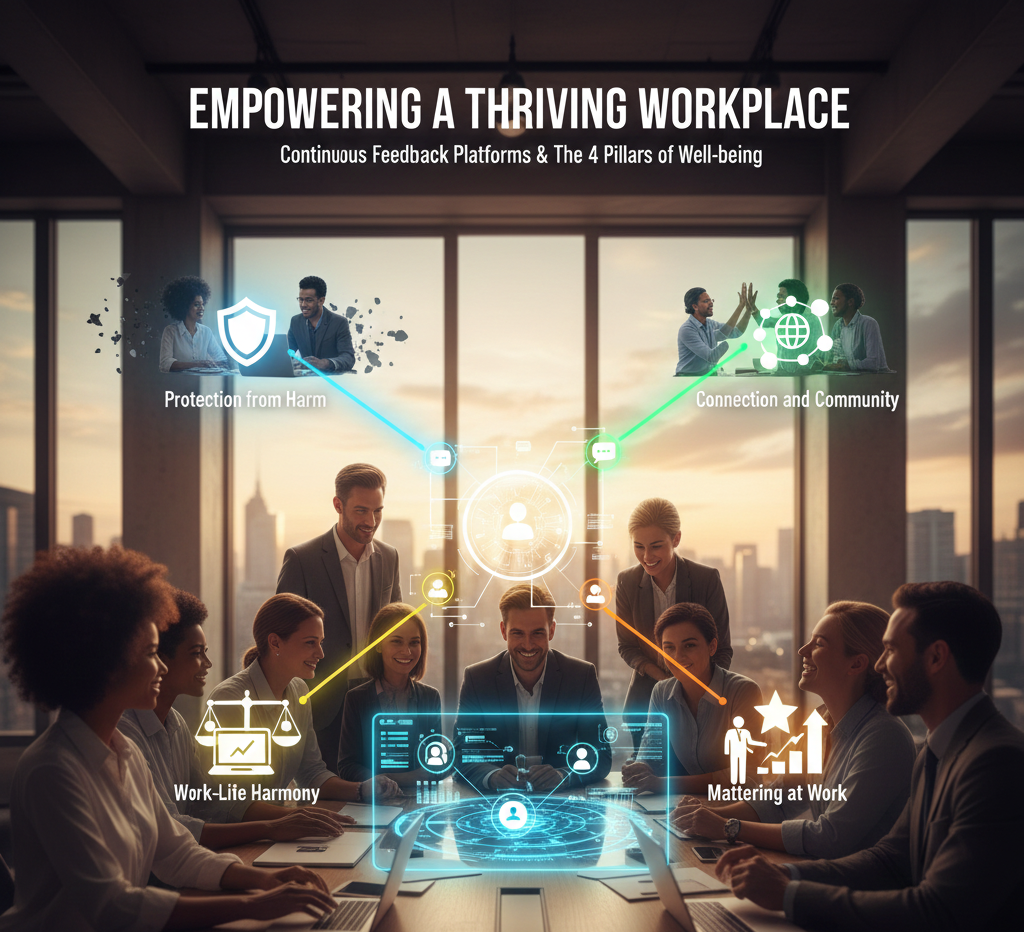
Culture Building: Creating an open, transparent, and trust-based environment where all voices are heard (Connection and Community).
-
Organizational Change: Using pulse surveys to gauge immediate employee reaction to structural or policy changes, allowing for agile course correction.
-
Well-being Monitoring: Collecting data on themes related to workload and stress to help address Protection from Harm and Work-Life Harmony.
Key Challenges 🚧
-
Cultural Resistance: Moving away from traditional annual reviews requires a significant shift in mindset, particularly among long-tenured managers who may resist adopting a coaching mentality.
-
Feedback Fatigue: Over-implementation (too many surveys, too much mandatory feedback) can overwhelm both employees and managers, causing the system to be treated as a check-the-box exercise rather than a meaningful interaction.
-
Inconsistent Quality: The effectiveness relies heavily on managers being trained to provide constructive, specific, and unbiased feedback. Poorly delivered feedback can be demoralizing, regardless of the platform used.
-
Data Overload: The platforms generate vast amounts of data. Organizations often struggle to analyze these continuous streams of feedback and translate them into concrete, actionable organizational changes.
Strategic Approaches (Strategy) 🎯
-
Phased Rollout & Change Management: Implement the platform in phases (e.g., starting with peer recognition before moving to management check-ins) and heavily invest in communication explaining the why behind the change.
-
Manager Training: Provide comprehensive, ongoing training focused on coaching skills, facilitating developmental conversations, and mitigating unconscious bias in feedback.
-
Link Feedback to Impact: Routinely use the data collected to inform visible policy or operational changes, and communicate the outcome back to the employees (“You spoke, we listened”). This closes the feedback loop and reinforces trust.
-
Integration with HRIS: Seamlessly integrate the feedback platform with the core HR Information System (HRIS) to ensure data consistency, automate reminders, and simplify the user experience for everyone.
Conclusion ✅
Continuous Employee Feedback and Communication Platforms are indispensable tools for the modern, agile workplace. They empower organizations to gather real-time intelligence on their people, transforming slow, bureaucratic HR processes into fluid, developmental dialogues. While challenges exist—primarily related to cultural adoption and manager skill development—the strategic implementation of these platforms is essential for fostering a thriving, engaged workforce, ensuring that the critical pillars of Protection from Harm, Connection, Work-Life Harmony, and Mattering at Work are actively supported and sustained.