
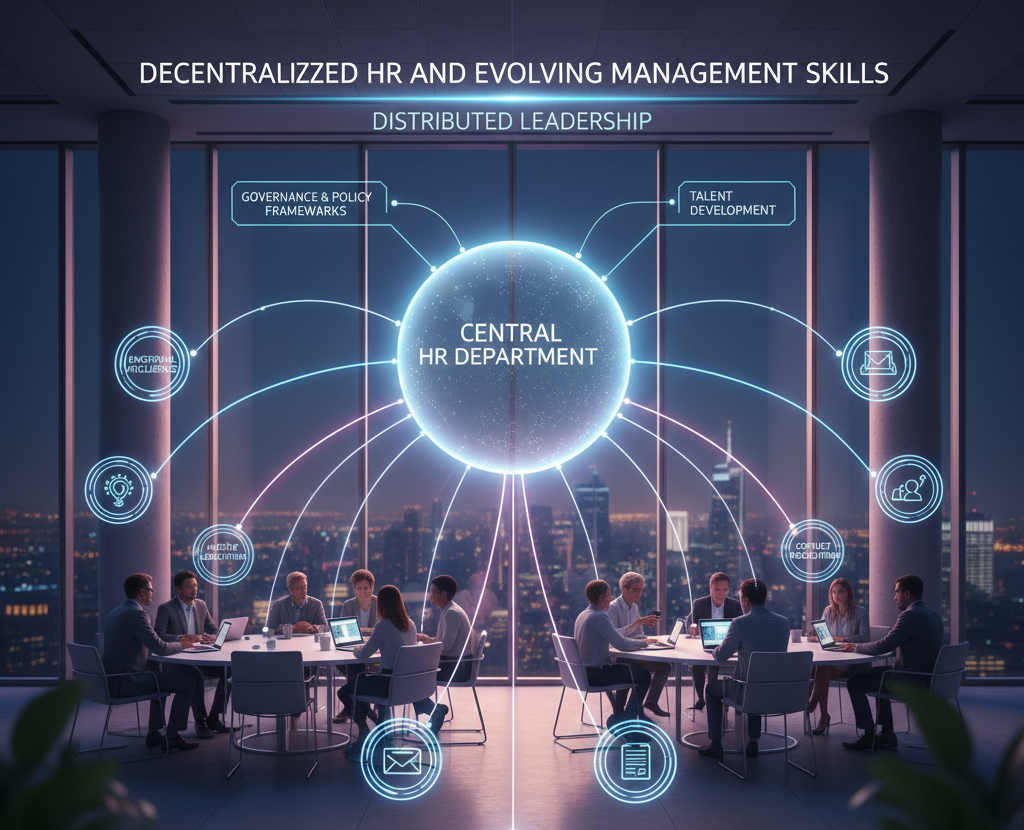
The Shift to Distributed Responsibility:-
The modern workplace is rapidly moving towards Decentralized HR, where traditional administrative tasks and operational decisions are distributed away from a central HR department and embedded within business units or delegated directly to line managers. This strategic pivot aims to increase agility and contextual relevance. This transformation necessitates a profound change in management skills, demanding leaders who are proficient in coaching, empowering teams, and navigating complex employee relations with greater autonomy. Effective content must highlight this shift from centralized control to distributed leadership.
Autonomy, Agility, and New Skill Sets (100–200 Words)
Decentralized HR empowers line managers to become People Managers, making real-time decisions on performance, development, and basic employee issues tailored to their team’s unique context. This agility is crucial in fast-paced, complex organizations. Consequently, the manager’s skill set must evolve drastically: they need to move beyond technical expertise to master Emotional Intelligence (EQ), conflict resolution, and coaching. The central HR team shifts from execution to governance, creating frameworks, policies, and providing complex legal and development support. Content should focus on this new partnership: HR as the consultant and architect, and the line manager as the implementer and coach.
Effective content on Decentralized HR and Evolving Management Skills should focus on the following key concepts:-
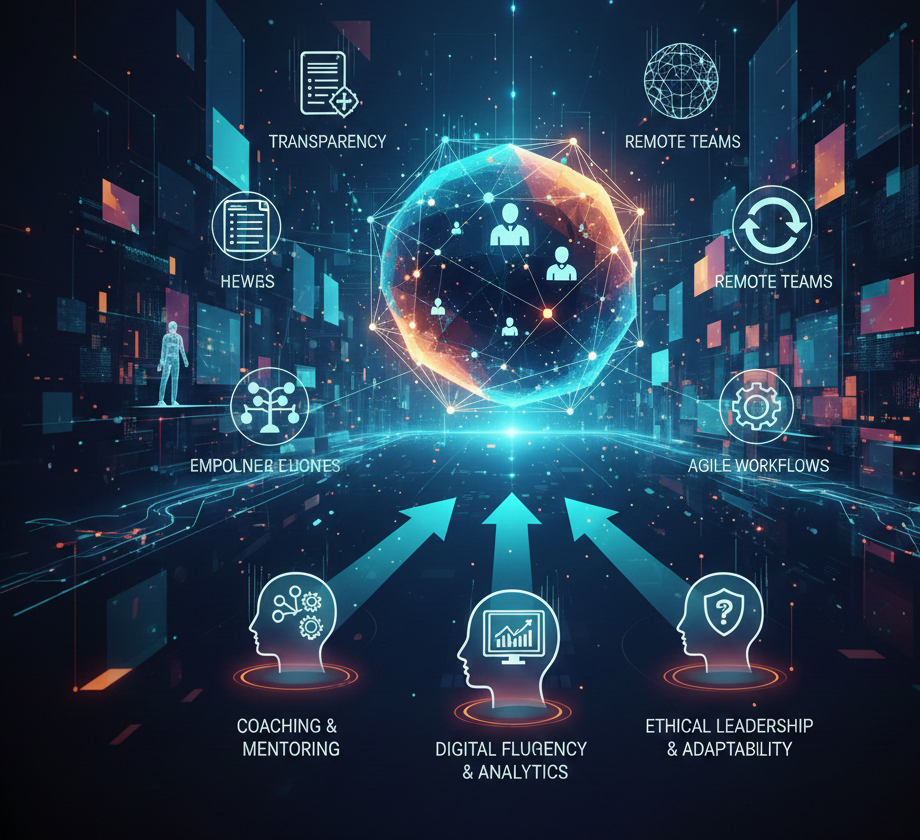
| Keyword Point | Content Explanation |
| Decentralized HR Model | A structure where operational HR tasks (e.g., first-level performance management, time-off approvals, basic employee relations) are delegated to line managers and business unit leaders, moving away from a single centralized HR office. Explanation: This increases business alignment and speed of decision-making, allowing HR to focus on strategy. |
| HR Business Partner (HRBP) | The HR central role transforms into a strategic consultant. HRBPs embed within specific business units to provide specialized advice on talent strategy, organizational design, and complex employee relations cases. Explanation: The HRBP ensures consistency and provides the high-level expertise managers lack. |
| People Management Skills | The new essential competencies for line managers: Emotional Intelligence (EQ), Active Listening, Constructive Feedback, and Coaching. Explanation: Managers must now excel at the ‘soft skills’ necessary for employee development and motivation, rather than just technical direction. |
| Empowerment and Accountability | Decentralization gives managers the authority to act (empowerment) but also assigns them the responsibility for people outcomes (accountability). Explanation: Content must stress the importance of adequate training for managers to handle this new dual role effectively and ethically. |
| Self-Service Technology | The reliance on Employee Self-Service (ESS) and Manager Self-Service (MSS) platforms (e.g., for payroll changes, benefits enrollment, performance goal setting). Explanation: Technology is the enabler, automating the administrative processes that managers and employees now directly handle, making decentralization feasible. |
Conclusion: The Future of People Leadership :-
The shift to Decentralized HR is not merely an organizational change; it’s an investment in leadership. By distributing HR functions, organizations gain agility and empower contextual decision-making. The success of this model hinges entirely on upskilling line managers to embrace their new roles as coaches and people experts. Ultimately, this transformation creates a more responsive, engaged, and strategically aligned workforce, marking the evolution from traditional HR administration to embedded people leadership.