
Essential 1:
Protection from Harm:-

Protection from Harm” is a fundamental pillar of any effective employee well-being strategy. It goes beyond mere physical safety to encompass safeguarding employees from psychological, emotional, and social damage within the work environment. This means actively addressing and mitigating stressors like excessive workloads, bullying, harassment, discrimination, and a lack of psychological safety. Organizations committed to protection from harm implement clear policies, foster inclusive cultures, and ensure accessible reporting mechanisms. By proactively eliminating these detrimental elements, businesses create a foundation where employees feel secure, respected, and valued, allowing them to focus on their work without fear of adverse impact on their mental or emotional health. A truly protective environment empowers individuals and strengthens the entire workforce.
🛡️ Scope of Protection from Harm:-
Areas of Coverage:-
| Area of Protection | Description and Focus | Examples of Harm to Mitigate |
| 1. Physical Safety | Traditional workplace safety focused on preventing accidents, injuries, and illnesses in the physical environment. | Slips, trips, falls, exposure to hazardous materials, musculoskeletal injuries (e.g., from poor ergonomics). |
| 2. Psychological Safety | The belief that one will not be punished or humiliated for speaking up with ideas, questions, concerns, or mistakes. Focuses on the climate of fear and vulnerability. | Fear of retaliation, being silenced, being shamed for errors, toxic secrecy. |
| 3. Emotional/Mental Harm | Safeguarding against factors that lead to stress, burnout, anxiety, and depression. Focuses on the workload and job demands. | Excessive workloads, unreasonable deadlines, chronic high stress, lack of work-life balance, lack of control over work. |
| 4. Social/Interpersonal Harm | Protecting against malicious or disrespectful behavior directed at employees by colleagues, managers, or external parties. | Bullying, harassment (sexual, verbal, non-verbal), mobbing, social exclusion, and discrimination. |
Essential 2:
Connection and Community:-
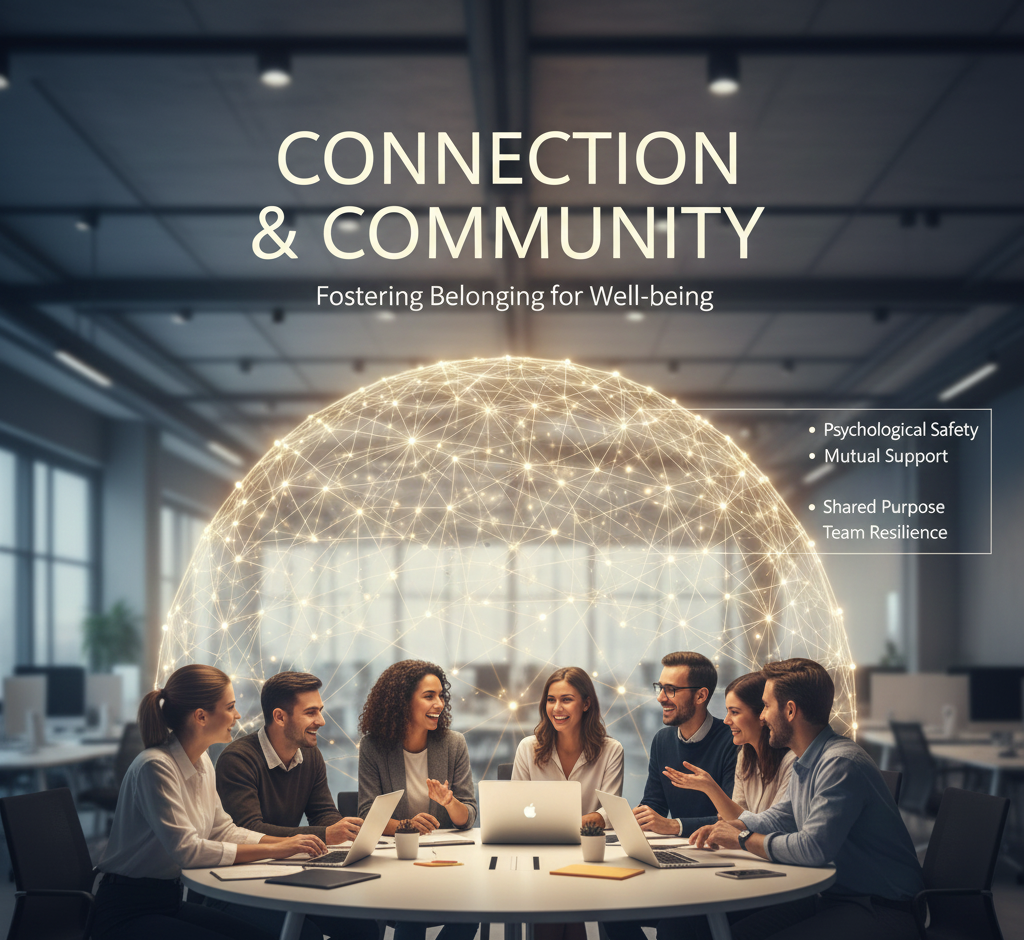
The concept of “Connection and Community” recognizes the fundamental human need for belonging, support, and meaningful relationships within the work environment. It is an essential pillar of a holistic employee well-being strategy, moving beyond individual resilience to focus on the strength and quality of the social fabric that holds an organization together. When employees feel connected—to their colleagues, their team, and the company’s mission—they experience greater psychological safety, lower stress, and higher levels of engagement and commitment. A strong sense of community counteracts feelings of isolation, which are detrimental to mental health and professional performance.
Scope:-
The scope of Connection and Community initiatives encompasses all aspects of the employee experience where social interaction and team dynamics play a role. This includes, but is not limited to:
-
Team Structures and Collaboration: Designing teams that foster interdependence and mutual support, whether in-person, remote, or hybrid.
-
Organizational Culture: Promoting a culture of inclusion, respect, and psychological safety where vulnerability is accepted and differences are valued.
-
Physical and Virtual Spaces: Creating environments (physical offices, digital platforms, virtual meetings) that facilitate spontaneous and purposeful social interaction.
-
Employee Resource Groups (ERGs) and Social Activities: Supporting formal and informal networks that allow employees to connect based on shared interests, identities, or experiences.
-
Leadership Behavior: Training leaders to actively build trust, encourage peer-to-peer support, and model connected behavior.
Objective:-
The primary objective of focusing on Connection and Community is to cultivate an environment of shared belonging, mutual support, and collective resilience, leading to tangible improvements in employee well-being and organizational performance.
Key specific objectives include:
-
Enhance Psychological Safety: To increase employees’ comfort in being themselves, speaking up, and taking interpersonal risks without fear of negative consequences.
-
Mitigate Social Isolation: To actively reduce feelings of loneliness and detachment, especially for remote or hybrid workers, by creating intentional opportunities for interaction.
-
Boost Engagement and Retention: To strengthen the emotional ties between employees and the organization, resulting in higher job satisfaction, commitment, and lower voluntary turnover.
-
Improve Team Performance: To facilitate more effective communication, collaboration, and knowledge sharing by building strong, trusting relationships among team members.
-
Increase Support Networks: To ensure every employee has access to formal (e.g., mentorship) and informal (e.g., friendships) support systems to navigate work-related and personal challenges.
Essential 3:
Work-Life Harmony:-
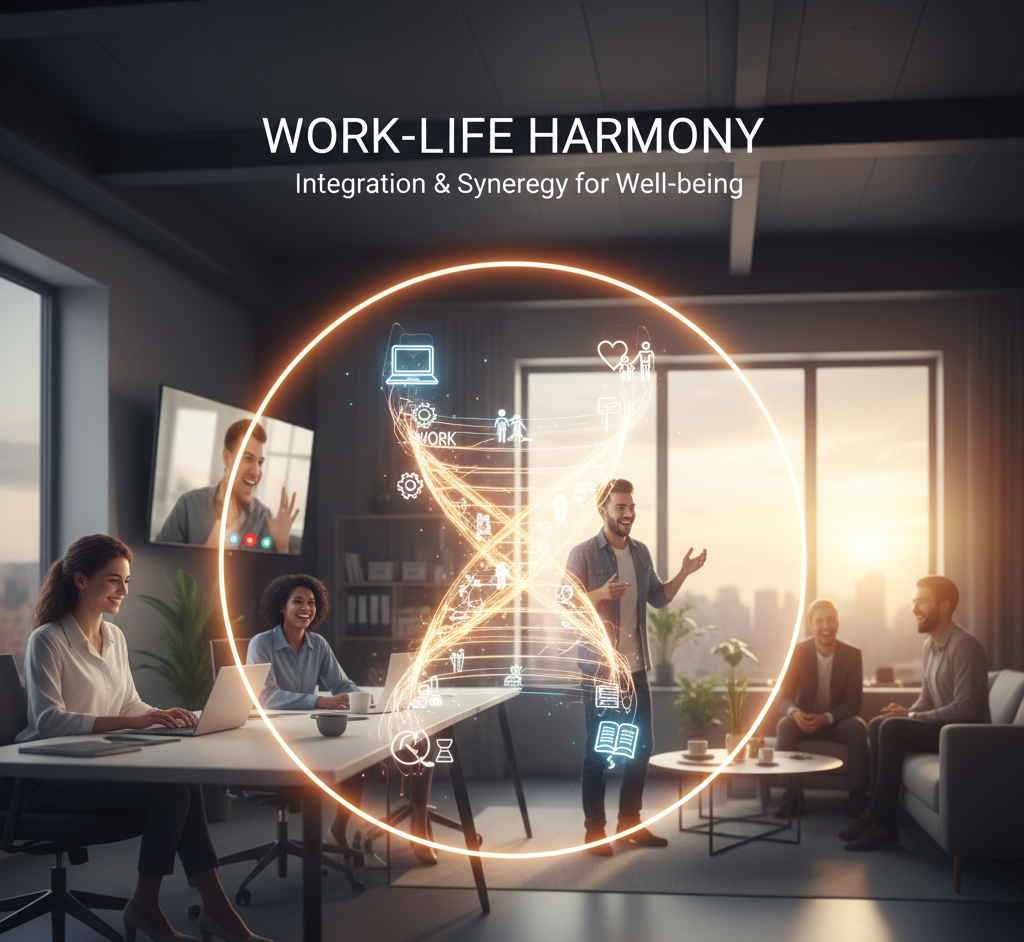
Work-Life Harmony (WLH) is the third essential pillar of an effective employee well-being strategy. It moves beyond the traditional and often impossible goal of “work-life balance”—which implies a rigid, 50/50 split—to focus on the integration and synergy between an employee’s professional and personal lives. Harmony is achieved when an individual feels their career supports, rather than detracts from, their personal priorities, relationships, and health. It is about creating flexible boundaries and a supportive culture where employees can meet their work obligations while simultaneously tending to their needs outside of work. This integration is crucial for preventing burnout, improving mental health, and sustaining long-term productivity and engagement.
Area of Scope:-
Key areas within this scope include:-
-
Scheduling Flexibility: Policies governing when and where work is performed (e.g., flextime, compressed workweeks, hybrid/remote options).
-
Workload Management: Monitoring and adjusting the volume of work and organizational expectations regarding availability (e.g., “right to disconnect” policies).
-
Time-Off and Leave: Comprehensive policies for paid time off (PTO), sick leave, parental leave, and sabbatical options.
-
Boundary Setting: Training and cultural practices that empower employees and managers to establish and respect healthy boundaries between work and personal time.
-
Resource Support: Providing resources that reduce personal burdens, such as on-site childcare referrals or subsidized services.
Key Challenges in Achieving Harmony:-
-
Always-On” Culture: The expectation, often fueled by technology and global teams, that employees must be constantly accessible, blurring the lines between work and personal time.
-
Managerial Mindset: Managers who operate under a traditional, presence-based performance model and struggle to trust employees working flexible schedules or remotely.
-
Inequitable Access: Harmony programs often being underutilized by those who need them most (e.g., fear of career penalty for taking leave or working compressed hours).
-
Workload Intensification: Giving employees flexibility without reducing overall work demands, resulting in the same workload being squeezed into less time, increasing stress.
-
Perceived Urgency: A cultural emphasis on immediate response and crisis mode that makes planned time away or dedicated personal time feel impossible.
Strategic Approaches:-
| Strategic Area | Key Action / Initiative | Expected Outcome |
| Flexibility & Autonomy | Implement core hours for meetings and flexible start/end times. Offer remote/hybrid work options where feasible. | Increased employee control over their schedule; reduced commuting stress. |
| Cultural & Leadership Shift | Train managers to measure performance based on output and outcomes, not “face time” or hours spent working. | Trust-based culture; reduction in presenteeism; management support for boundary setting. |
| Policy Enforcement | Establish clear “Right to Disconnect” guidelines (especially for emails/messages outside of work hours). Mandate minimum PTO usage. | Protects personal recovery time; prevents burnout; sets clear expectations. |
| Resource Provision | Offer subsidized well-being and care services (e.g., backup childcare, financial planning, EAP for stress management). | Direct reduction of non-work related stressors; frees up personal time and energy. |
| Communication & Modeling | Senior leaders and managers should openly model healthy harmony practices (e.g., taking leave, blocking focus time, signing off). | Normalizes and validates the use of WLH benefits for all employees. |
Essential 4:
Mattering at Work:-
Mattering at Work is the fourth crucial element of a holistic employee well-being strategy. It goes deeper than engagement or satisfaction, tapping into the fundamental human need to feel valued and make a difference. Mattering is the perception that one’s presence and function are significant to the colleagues, the team, and the organization’s mission. When employees believe their unique contributions are noticed and appreciated, and that their absence would be genuinely felt, their sense of self-worth, motivation, and psychological health dramatically improve. This pillar is about shifting the focus from simply completing tasks to ensuring every individual understands their impact and feels that their identity and work product are meaningful components of the collective success.
🔑 Scope: Defining Mattering:-
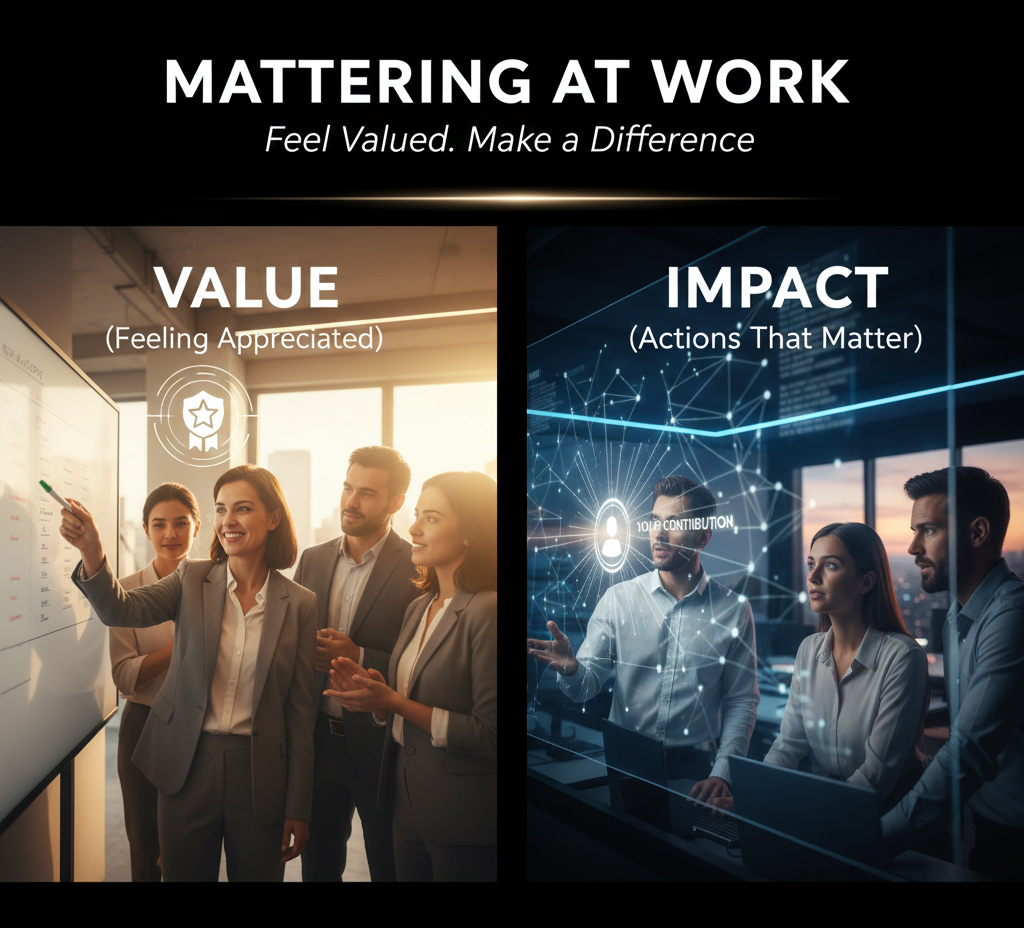
Mattering at Work encompasses organizational practices and norms that affirm an employee’s value and influence. The scope is defined by two primary dimensions:
-
Value (Feeling Appreciated): The perception that one’s presence is important and appreciated by the organization and colleagues.
-
Impact (Feeling that Actions Matter): The perception that one’s work contributes meaningfully to organizational success and the larger mission.
Key Areas Addressed:
-
Work Design: Ensuring roles are inherently meaningful.
-
Recognition & Feedback: How appreciation is delivered.
-
Input & Autonomy: The degree of influence employees have in decisions.
-
Visibility of Contribution: Linking individual effort to the larger mission.
-
Organizational Touchpoints: Leadership communication, performance management, and career development.
💡 Strategic Approaches: Achieving Mattering:-
The strategy is a multi-pronged approach centered on communication, recognition, and empowerment:
-
Clarify and Connect Impact:
-
Articulate the organizational mission and purpose clearly.
-
Consistently link individual roles/projects back to this larger purpose (the “why”).
-
Use storytelling to demonstrate how specific employee contributions led to key outcomes.
-
-
Implement Meaningful Recognition:
-
Provide recognition that is specific, timely, and personalized (moving beyond transactional rewards).
-
Encourage peer-to-peer recognition.
-
Celebrate diverse contributions (effort, initiative, process improvement, not just results).
-
Ensure leaders express sincere gratitude.
-
-
Foster Voice and Autonomy:
-
Grant employees autonomy over how they execute their work.
-
Create channels for meaningful input on decisions.
-
Involve employees in planning and problem-solving.
-
Demonstrate that suggestions are seriously considered and acted upon to validate expertise.
-
-
Promote Individual Growth:
-
Invest in career development and skills training.
-
Provide opportunities for growth and challenge.
-
Communicate that the employee’s future potential and advancement are valued by the organization.
-
📝 Summary of the Four Essential Pillars of Employee Well-being:-
An effective employee well-being strategy rests on four critical pillars. Protection from Harm is the foundation, ensuring a secure environment free from physical, psychological, emotional, and social threats like bullying and excessive stress. Connection and Community fosters a sense of belonging and mutual support by building strong social networks and promoting psychological safety, thereby reducing isolation. Work-Life Harmony moves beyond simple balance to integrate professional and personal life flexibly, using policies like the Right to Disconnect and output-focused management to prevent burnout. Finally, Mattering at Work fulfills the human need for purpose, ensuring employees feel valued and influential by connecting their roles to the organizational mission and providing meaningful recognition and autonomy. Together, these pillars create a holistic, resilient, and engaging workplace.