
INTRODUCTION :-
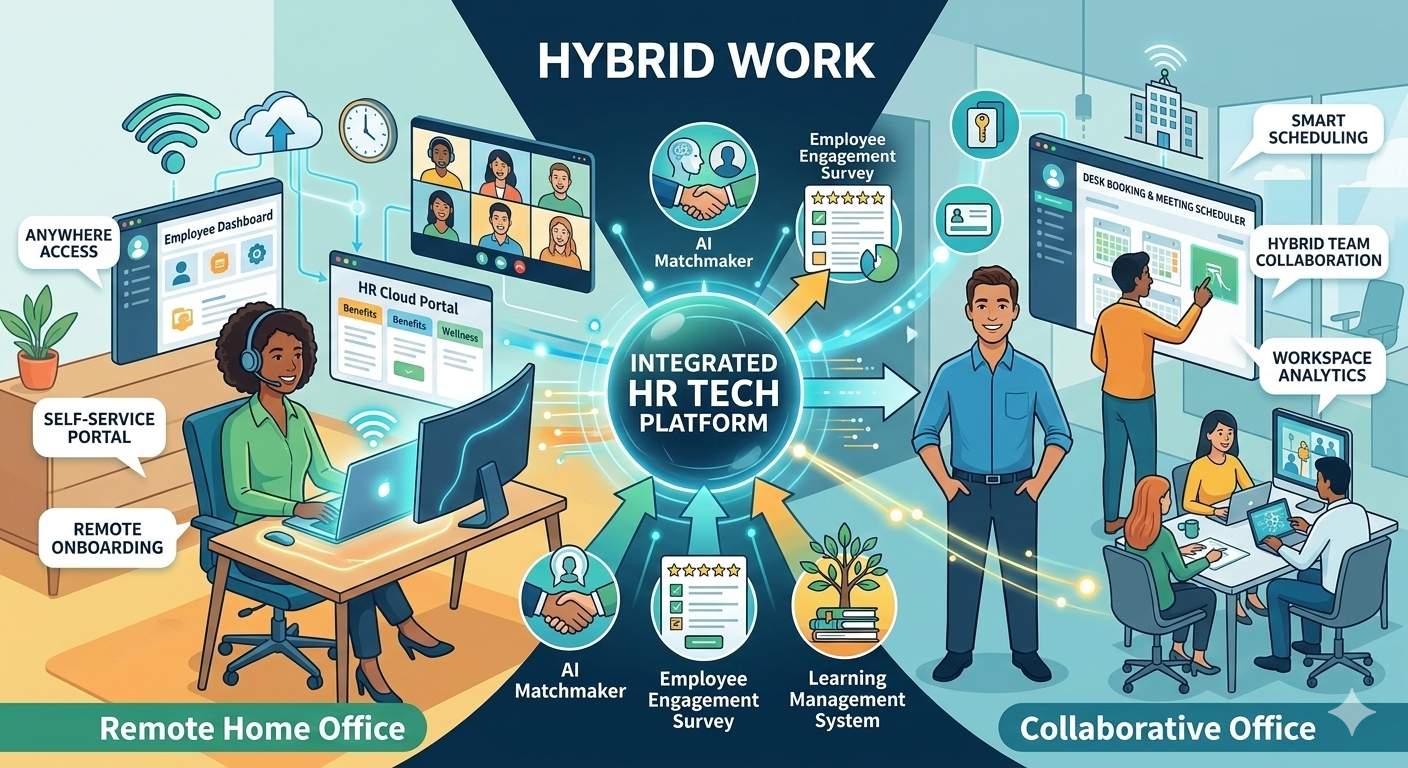
Work has changed significantly in recent years. A trend toward more flexible, remote-friendly work environments
rather than traditional office jobs was accelerated by the COVID-19 pandemic. Many organizations responded by
implementing the hybrid work model, a novel strategy. The advantages of both in-office and remote work are
combined in this model. It allows workers to work from any location while maintaining the connections and
teamwork that come with physical offices. But offering flexibility is only one aspect of the answer. Additionally,
businesses must uphold accountability, engagement, and performance. In this regard, HR technology is crucial. HR
technology assists businesses in efficiently managing and supporting their hybrid workforce through the use of cloudbased systems, AI tools, and real-time data.
💡 The Reshaping Tides of Work: A Synthesis of Research:-
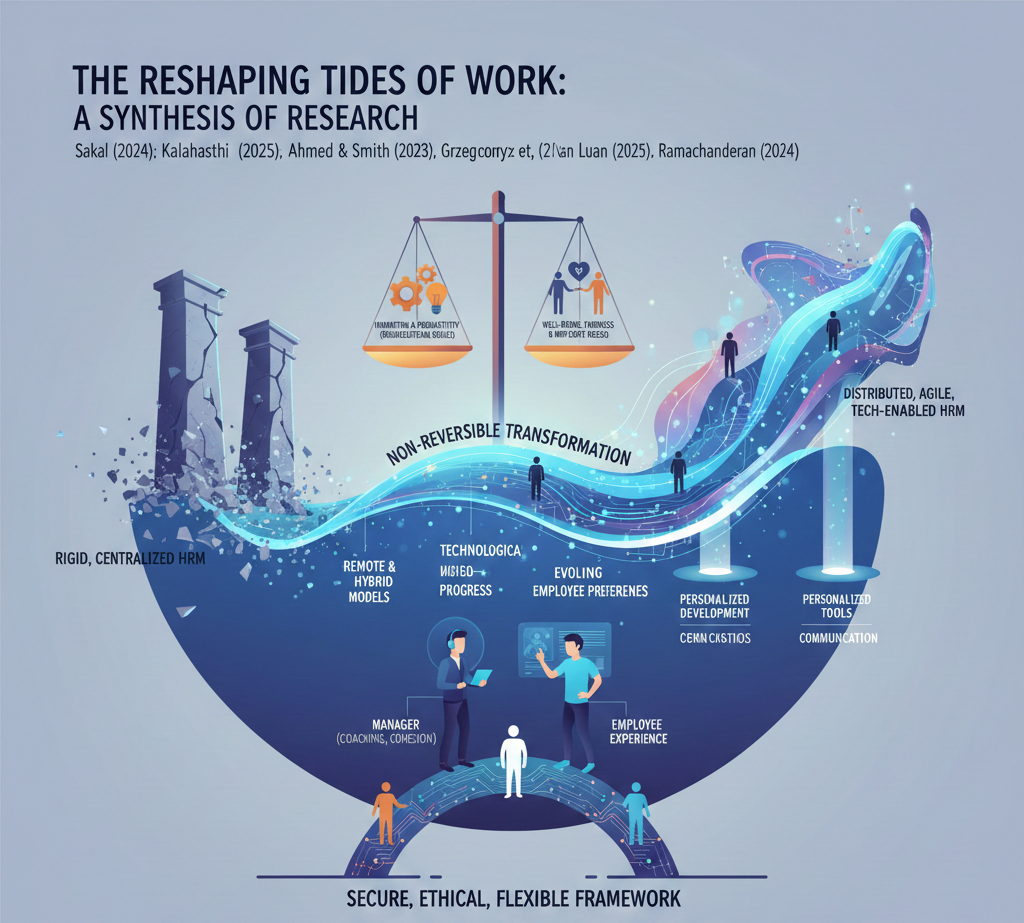
The collective body of research reveals that the shift to Remote and Hybrid Work Models is a profound, non-reversible transformation driven by technological progress (Sakal, 2024; Kalahasthi, 2025) and evolving employee preferences (Ahmed & Smith, 2023). This new paradigm fundamentally demands that Human Resource Management (HRM) abandon rigid, centralized practices for a distributed, agile, and technology-enabled approach (Kalahasthi, 2025). The core challenge lies in the dual necessity of balancing organizational goals—like innovation and productivity (Sakal, 2024)—with critical employee needs, including well-being, fairness, and inclusion (Grzegorczyk et al., 2021; Van Luan, 2025). Key enablers of this transition include investing in collaboration tools, personalized development strategies, and open communication systems (Ahmed & Smith, 2023; Ramachanderan, 2024), while managers must evolve to be proficient in coaching and maintaining cultural cohesion (Van Luan, 2025). Ultimately, the future of work hinges on HR’s ability to architect a secure, ethical, and flexible framework that treats technology as the enabler and the employee experience as the strategic outcome.
🎯 Scope of the Study: HR Tech for Hybrid Work:-
-
Core Focus: Exploring the role of Human Resource Technology (HR Tech) in effectively supporting hybrid work models.
-
Three Key Dimensions: The analysis centers on how HR Tech enhances:
-
Flexibility in work arrangements.
-
Accountability and performance management.
-
Employee Engagement and connection.
-
-
Practical Applications: Highlighting specific tools and initiatives, including:
-
Remote Collaboration Tools (e.g., communication, project management).
-
Digital Performance Management Systems.
-
Well-being Initiatives powered by technology.
-
-
Relevance/Goal: Providing insights to help organizations:
-
Optimize their hybrid work environments.
-
Reduce Employee Turnover.
-
Strengthen Talent Appeal in the competitive global market.
-
🛑 Limitations of the Study:-
-
Cost Barriers for HR Tech:
-
New/Small Businesses face significant challenges affording advanced HR tools.
-
This limits their ability to compete with larger corporations offering comprehensive hybrid work solutions.
-
-
Data Privacy Concerns:
-
Increased reliance on cloud-based HR solutions amplifies the risk of data breaches.
-
Stricter adherence is required for regulations like GDPR (General Data Protection Regulation) and CCPA (California Consumer Privacy Act).
-
-
Generational Differences:
-
Varied attitudes toward technology and work arrangements exist across different generations.
-
This necessitates individualized implementation strategies, making the roll-out of new systems more complex.
-
⚠️ Challenges of Using HR Technology:-
-
High Implementation Costs:
-
Expense of Sophisticated Tools: Prohibitive for small businesses and startups with limited budgets.
-
Ongoing Costs: License fees, maintenance, and technical assistance strain resources.
-
-
Resistance to Technology Adoption:
-
Varying Tech Competencies: Managers and employees may resist new systems.
-
Multi-Generational Staff: Younger workers may be enthusiastic, while others require extensive training.
-
-
Data Security and Privacy Risks:
-
Increased Exposure: Higher dependence on cloud-based infrastructure leads to greater risk of breaches.
-
Compliance Burden: Strict adherence required for GDPR and CCPA, necessitating strong cybersecurity investment.
-
-
Equity and Inclusion Disparities:
-
Hybrid Divide: Potential for differences in visibility and access to opportunities between remote and in-office workers.
-
-
Erosion of Trust and Autonomy:
-
Overdependence on Monitoring: Excessive surveillance tools can diminish employee trust and engagement.
-
✅ Strategies for Effective HR Tech Implementation:-
-
Select Intuitive Tools:
-
Choose elegant and user-friendly systems (e.g., Microsoft Teams, BambooHR) to reduce the learning curve and encourage rapid adoption.
-
-
Provide Comprehensive Training and Support:
-
Offer full training through interactive guides, support mechanisms, and immersive methods (e.g., gamified learning) to foster comfort and competency.
-
-
Foster Ongoing Employee Input:
-
Use tools (e.g., Qualtrics) to gather data on tool usage and continuously enhance the technology experience.
-
-
Integrate Tech with Employee-Centric Programs:
-
Link HR tech to initiatives like flexible leave or wellness programs to create a more supportive and fulfilling workplace.
-
-
Prioritize Data Privacy:
-
Implement safeguards such as encryption, two-factor authentication, and regular security audits to protect sensitive data.
-
-
Ensure Equity and Fairness:
-
Use analytics to detect and remedy imbalances (e.g., in promotion rates). Example: Introducing virtual mentorship.
-
-
Focus on Outcome Monitoring:
-
Structure technology to monitor results rather than micromanaging tasks to preserve employee autonomy and trust
-
CONCLUSION:-
Human Resource technology is a key to the achievement of hybrid work patterns, allowing organizations to develop
flexible, responsible, and stimulating work spaces that serve the demands of a contemporary workforce. Utilizing
cloud-based systems, collaboration platforms, performance management software, and engagement tools, companies
can navigate the intricacies of dispersed work while building a culture of responsibility and productivity. In spite of
difficulties like expense, resistance to adoption, and data privacy, strategic implementation strategies – like choosing
user-friendly tools, offering extensive training, and fostering equity – can guarantee positive results. As hybrid work
becomes an ongoing aspect of the global workplace, organizations need to combine HR technology with employee focused strategies to increase satisfaction, minimize turnover, and create long-term success.