

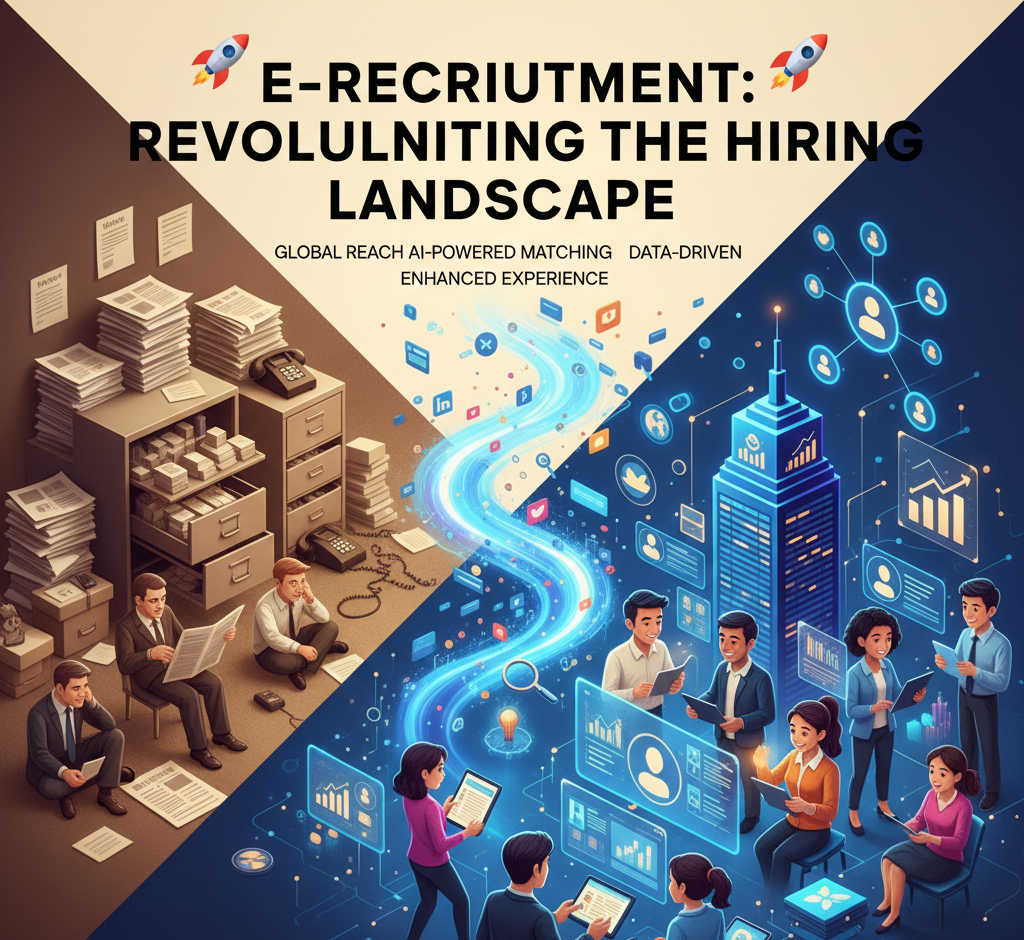
The world of work has undergone a seismic shift, and with it, the traditional methods of recruitment have evolved dramatically. Gone are the days when newspaper ads and word-of-mouth were the primary drivers of talent acquisition. In today’s hyper-connected digital era, e-recruitment has emerged as the dominant force, transforming how organizations find, attract, and onboard their most valuable asset: people.
What exactly is E-Recruitment?
At its core, e-recruitment (electronic recruitment) refers to the use of technology, particularly the internet, to perform recruitment activities. It encompasses a wide range of digital tools and platforms, from online job boards and company career pages to social media, applicant tracking systems (ATS), and video interviewing tools. It’s essentially taking the entire hiring process online, making it faster, more efficient, and often more effective.
The Pillars of E-Recruitment: How it Works
E-recruitment isn’t a single tool but rather a comprehensive digital ecosystem. Here are some of its key components:
-
Online Job Boards & Aggregators: Platforms like LinkedIn, Indeed, Glassdoor, and specialized industry job sites are the digital marketplaces where employers post vacancies and candidates search for opportunities. Aggregators pull job postings from various sources, centralizing the search.
-
Company Career Pages: A dedicated section on an organization’s website showcasing job openings, company culture, employee testimonials, and benefits. This is often the first stop for candidates truly interested in a company.
-
Social Media Recruitment (Social Recruiting): Leveraging platforms like LinkedIn, Facebook, Twitter, and even Instagram to identify, engage, and attract passive candidates. Recruiters can build talent pools, promote their employer brand, and directly connect with potential hires.
-
Applicant Tracking Systems (ATS): Software solutions that automate and manage the entire recruitment workflow, from posting jobs and screening resumes to scheduling interviews and sending offer letters. ATS are crucial for handling large volumes of applications efficiently.
-
Online Assessments & Screenings: Digital tools for pre-employment testing, skill assessments, personality quizzes, and background checks, helping recruiters to quickly evaluate candidates’ suitability.
-
Video Interviewing Platforms: Tools that facilitate live or pre-recorded video interviews, allowing recruiters to screen candidates remotely, saving time and travel costs.
-
Talent Relationship Management (TRM) Systems: Platforms designed to build and nurture long-term relationships with potential candidates, even if there isn’t an immediate opening.
The Unmistakable Advantages of E-Recruitment
The shift to digital isn’t just a trend; it’s driven by tangible benefits that positively impact both employers and job seekers.
-
Wider Reach & Global Access: Instantly connect with a global talent pool, transcending geographical boundaries and time zones. This is especially vital for remote-first companies.
-
Reduced Costs: Significantly lower expenses associated with traditional methods like print advertising, travel for initial interviews, and administrative overhead.
-
Faster Time-to-Hire: Automated processes, instant communication, and efficient screening tools drastically shorten the recruitment cycle, allowing companies to fill critical roles more quickly.
-
Enhanced Candidate Experience: Streamlined application processes, clear communication channels, and mobile-friendly interfaces create a more positive and engaging experience for applicants.
-
Improved Quality of Hires: Advanced screening tools, targeted advertising, and data analytics help identify more suitable candidates, leading to better long-term hires.
-
Stronger Employer Branding: Online platforms provide ample opportunity to showcase company culture, values, and benefits, making the organization more attractive to top talent.
-
Data-Driven Decisions: ATS and other digital tools provide valuable metrics on sourcing channels, candidate progression, and recruitment efficiency, enabling continuous improvement.
-
Green & Sustainable: Reduced reliance on paper and travel contributes to a more environmentally friendly recruitment process.
The Challenges and Considerations
While e-recruitment offers immense advantages, it’s not without its hurdles:
-
Digital Divide: Some excellent candidates, particularly in certain industries or demographics, might have limited digital access or proficiency.
-
Information Overload: Recruiters can be swamped with applications, making effective screening and filtering even more critical.
-
Maintaining Human Touch: Over-reliance on automation can sometimes depersonalize the process, making it essential to balance efficiency with human interaction.
-
Data Security & Privacy: Handling sensitive candidate data online requires robust security measures and adherence to privacy regulations (e.g., GDPR).
-
ATS Optimization: Candidates need to optimize their resumes for ATS to ensure their applications are parsed correctly and not overlooked.
The Future is Digital:-

E-recruitment is no longer an optional add-on; it’s a fundamental aspect of modern talent acquisition. As technology continues to evolve, we can expect even more sophisticated AI-powered tools for candidate matching, predictive analytics, and immersive virtual reality experiences in the hiring process.
For organizations looking to thrive in the competitive talent landscape, embracing and mastering e-recruitment is not just an advantage—it’s a necessity. It’s about leveraging the power of digital to connect with the right people, at the right time, to build the workforce of tomorrow.